.png%253Falt%253Dmedia%2526token%253D78c23398-5711-460d-b21c-4a7177094ae4%22%7D%2C%7B%22operation%22%3A%22resize%22%2C%22width%22%3A48%7D%2C%7B%22operation%22%3A%22output%22%2C%22format%22%3A%22webp%22%2C%22quality%22%3A75%7D%5D)
Quick Takeaways
- First 24-Hour Response: When a large pustule or cystic breakout appears, the primary objective is soothing inflammation gently with cold compresses and hydrocolloid patches, not popping or applying harsh drying spot treatments.
- Pause Retinol Use: Applying retinol over active, inflamed pustules disrupts an already compromised skin barrier, elevates TEWL, and prolongs recovery time.
- Peptide-Based Dermal Restoration: Dual Biopeptide Technology (Acnobet, Hairen, EGF, and Copper Peptide) dampens pro-inflammatory cytokines while accelerating tissue recovery without stripping essential moisture.
A sudden, painful breakout can feel like a skin emergency. The steps you take within the first 24 hours determine whether a lesion resolves smoothly or turns into deeper dermal damage with permanent scarring. This guide provides honest, medically backed first-aid steps, clarifying when skincare suffices and when consulting a dermatologist becomes necessary.
Understanding Root Triggers Behind Large Pustules and Cystic Breakouts
Large pustules and deep cystic nodules originate far beneath surface pores. Understanding these biological pathways guides realistic, effective treatment strategies.
C. acnes Proliferation, Sebum Congestion, and Hormonal Shifts
Cutibacterium acnes (C. acnes) is an anaerobic bacterium residing naturally within pilosebaceous units. Under normal conditions, C. acnes maintains microbiome balance. Complications arise when three factors align to trigger bacterial overgrowth:
- Excess Sebum Production: Stimulated by androgenic hormones, sebaceous glands secrete dense lipids that serve as nutrient substrates for C. acnes.
- Follicular Hyperkeratinization: Impaired desquamation clogs pore openings, creating the anaerobic, oxygen-deprived environment C. acnes requires.
- Inflammatory Immune Cascade: Enzymes and lipases secreted by overabundant C. acnes activate pro-inflammatory cytokines (IL-1α, TNF-α, IL-17), generating swollen pustules or deep cysts.
Cystic acne develops when this inflammatory cascade ruptures deep within the dermis rather than staying confined to the epidermis. This explains why deep lesions feel painful, cannot be squeezed out, and leave stubborn marks. Understanding the causes of recurring acne on cheeks and chin helps identify whether localized breakouts stem from mechanical friction, lipid barrier degradation, or hormonal fluctuations.
Scientific Note: Thiboutot et al. (2018) confirmed that inflammatory acne involves Toll-like receptor 2 (TLR2) and NLRP3 inflammasome activation on keratinocytes by C. acnes antigens, perpetuating dermal tissue damage even after bacterial populations decline.
Can Stomach Acid and Digestion Cause Acne? (Gut-Skin Axis Facts)
This question arises frequently and deserves an honest medical answer. Scientifically, a direct causal link between "high stomach acid" (GERD or gastritis) and facial acne has not been proven. However, the gut-skin axis, representing communication between intestinal health and cutaneous inflammation, is supported by evolving clinical evidence.
The proposed mechanism operates indirectly: intestinal microbiome dysbiosis increases gut permeability (leaky gut), allowing bacterial metabolites into systemic circulation to trigger low-grade systemic inflammation that exacerbates pre-existing acne lesions.
It is important to clarify that stomach acid alone does not directly cause acne. Improving digestive health can support overall systemic inflammation levels, but it does not replace targeted topical skin care.
Scientific Note: A systematic review by Salem et al. (2018) documented communication pathways between gut dysbiosis and inflammatory dermatoses via neuro-immuno-endocrine networks, though researchers stress that targeted topical intervention remains essential for active skin lesions.
First-Aid Action Plan: What to Do When a Breakout Suddenly Appears
Actions taken within the first 24 hours dictate recovery speed. The primary goal is dampening active swelling without inflicting trauma on surrounding skin tissue.
First 24-Hour Emergency Protocol
First 24-Hour Emergency Protocol
Recommended Actions
Prohibited Actions
Cool compresses induce temporary vasoconstriction, restricting inflammatory cell migration to the area and reducing localized swelling safely. This provides effective symptomatic relief during the initial 24 hours.
Hydrocolloid patches represent a evidence-backed topical intervention for pustules. They work by creating a moist wound-healing environment while passively drawing out inflammatory fluid and pus from open lesions.
Scientific Note: A trial by Kim et al. (2019) demonstrated that hydrocolloid dressings significantly reduced lesion erythema, exudate, and overall size within 24 hours compared to control groups without adverse irritation.
What Never to Do: The Medical Dangers of Squeezing Pustules
Squeezing inflamed pustules seems tempting but proves medically counterproductive. Applying mechanical pressure introduces severe complications:
- Lateral Follicular Rupture: External pressure frequently drives follicular contents (pus, bacteria, lipids) laterally into the deep dermis, spreading inflammation rather than relieving it.
- Dermal Mechanical Trauma: Squeezing inflicts micro-wounds that activate secondary inflammatory cascades, increasing post-inflammatory hyperpigmentation (PIH) and permanent scarring risks.
- Bacterial Inoculation: Unsterilized fingers introduce secondary bacterial strains into open, compromised tissue.
Scientific Note: Tanghetti et al. (2013) documented that mechanical trauma inflicted on active acne lesions increases post-inflammatory hyperpigmentation (PIH) incidence by 2- to 3-fold in Fitzpatrick skin phototypes III–VI.
Are Retinol and Harsh Spot Treatments Effective on Inflamed Breakouts?
Retinol holds strong scientific support for long-term acne prevention, but applying it directly over active, inflamed pustules is clinically counterindicated.
Retinoids accelerate cell turnover and normalize follicular keratinization, preventing new microcomedones. However, applying retinol over actively inflamed tissue introduces added cellular stress to an already compromised stratum corneum.
Key risks of using retinol over active pustules include:
- Accelerating desquamation on thinned, inflamed tissue, raising Trans-Epidermal Water Loss (TEWL) and sensitivity.
- Exacerbating existing erythema and swelling through localized irritation.
- Disrupting natural wound-healing processes during a critical recovery phase.
Clinical Recommendation: If retinol is part of your routine, pause its application over active breakouts for 7–10 days until inflammation subsides and barrier function recovers. Retinol excels at long-term prevention, not emergency active-lesion care.
Similarly, high-concentration benzoyl peroxide and alcohol-heavy spot treatments carry drawbacks on severely swollen pustules. Excessive drying strips localized lipids, raises TEWL, and triggers compensatory sebum overproduction once initial drying effects fade.
Optimal Skincare Ingredients for Oily, Sensitive, Acne-Prone Skin
Oily, sensitive, acne-prone skin requires a balanced regimen that calms active inflammation, regulates sebum production, and reinforces lipid barrier integrity simultaneously.
Why Inflamed Skin Requires Barrier Restoration, Not Harsh Exfoliation
Acne-prone skin frequently exhibits compromised barrier function even before breakouts appear. A weakened barrier permits easier C. acnes colonization and prolongs inflammatory responses.
Applying the most effective treatment for acne and barrier repair ensures that skin maintains balanced surface pH, elevates endogenous antimicrobial peptides, and stabilizes skin microbiomes without resorting to stripping exfoliants.
Scientific Note: Elias et al. (2001) demonstrated that barrier disruption directly increases pathogen susceptibility by altering skin surface pH and reducing natural defensin production.
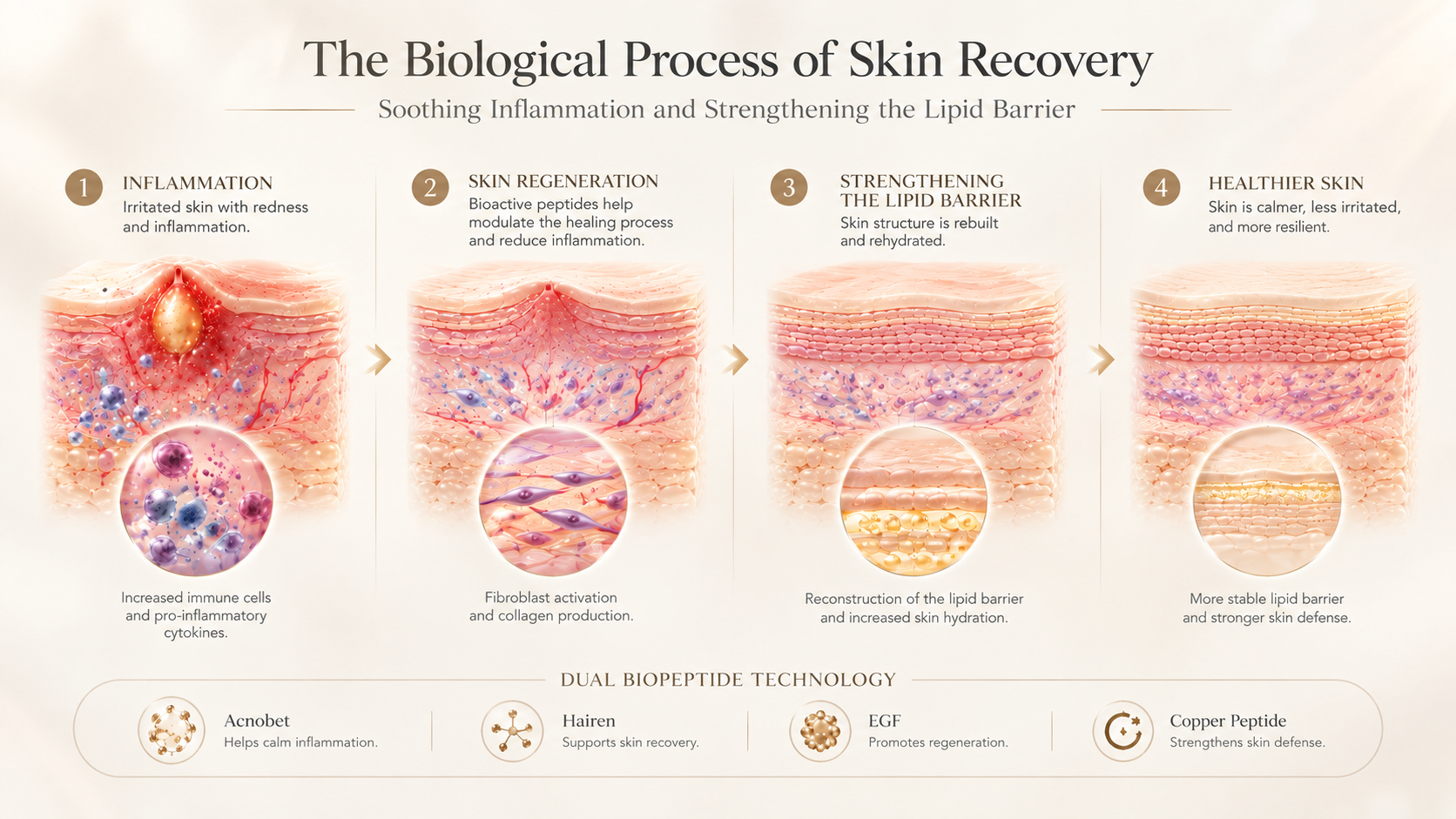
Infographic: Biological recovery process of inflamed skin tissue and lipid barrier reinforcement.
How Dual Biopeptides (Acnobet, EGF, and Copper Peptide) Calm Inflammation
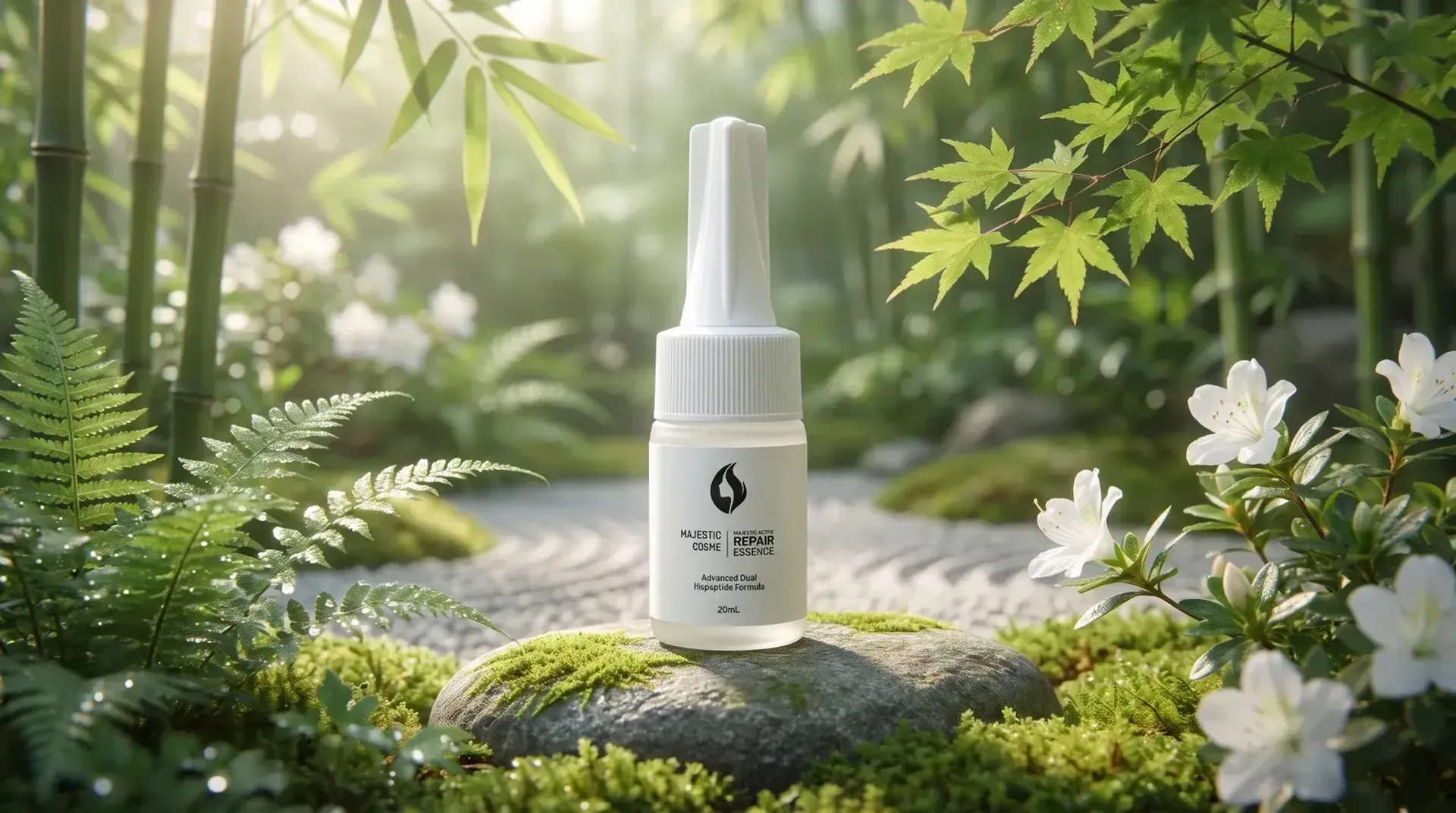
Dual Biopeptide Technology in Majestic Active Repair Essence intercepts the acne cycle across four biological checkpoints simultaneously:
Four-Point Mechanism of Dual Biopeptide Technology
- Acnobet: Modulates androgen stimulation on sebaceous glands to regulate excess oil secretion without drying skin. Normalizes follicular keratinocyte differentiation to keep pores clear.
- Hairen: Dampens pro-inflammatory cytokines (IL-1α and TNF-α) that prolong active lesions. Accelerates swelling resolution and protects dermal collagen.
- EGF (Epidermal Growth Factor): Binds to EGFR on keratinocytes and fibroblasts, accelerating cell migration and re-epithelialization of damaged tissue.
- Copper Peptide (GHK-Cu): Neutralizes reactive oxygen species (ROS), regulates tyrosinase to manage post-acne dark marks, and supports ceramide synthesis for barrier repair.
Panel Perception Trial Results: Majestic Active Repair Essence (4 Weeks)
*Data based on a 4-week internal panel perception trial of 30 subjects (male and female, aged 18–35) with acne-prone skin. Individual results may vary.
Calm Active Breakouts Without Stinging or Irritation
Prevent long-term barrier damage and support tissue recovery with Dual Biopeptide Technology. Gentle, precise, and effective.
Medical Triage: When Can Skincare Manage Breakouts vs Seeing a Dermatologist?
Honest medical triage is crucial. Skincare formulations have clear biological limits. Use this clinical guide to determine your best next step:
| Parameter | Manageable via Skincare | Dermatologist Consultation Required |
|---|---|---|
| Lesion Type | Mild-to-moderate papules, pustules, comedones | Deep nodules, large cysts (>1 cm), widespread lesions |
| Pain Level | Painless or slight tenderness when touched directly | Severe, throbbing pain even without physical contact |
| Lesion Depth | Superficial lesions visible on or near skin surface | Subterranean nodules deep in the dermis without surface head |
| Treatment Response | Improves within 1–2 weeks of proper topical care | No improvement after 2–3 months of consistent regimen use |
| Infection Signs | No spreading redness or systemic symptoms | Spreading redness, warmth, fever, or swollen lymph nodes |
For severe or resistant cystic acne, dermatologists can provide medical therapies beyond topical skincare: intralesional corticosteroid injections for rapid flattening, prescription oral/topical antibiotics, hormonal therapies, spironolactone, or oral isotretinoin.
Conclusion: Resolving Breakouts While Preserving Skin Defense Barriers
The most effective response to a sudden, large breakout is measured and structured: applying cool compresses, using hydrocolloid patches, pausing irritants like retinol, and utilizing biopeptides to calm inflammation while reinforcing barrier integrity.
Oily, sensitive skin does not require aggressive stripping. It requires precise biological signals to reduce inflammation, heal tissue, and fortify natural defenses against future breakout cycles.
When dealing with severe cystic acne unresponsive to topical care over several months, consulting a licensed dermatologist remains the safest and most effective course of action.
Frequently Asked Questions
Scientific References
- Thiboutot, D., et al. (2018). "New insights into the pathogenesis and management of acne." Journal of the American Academy of Dermatology, 78(2), S1-S8. https://doi.org/10.1016/j.jaad.2017.09.078
- Kim, H.J., et al. (2019). "Efficacy of Hydrocolloid Dressings for Acne Lesions: A Randomized Controlled Trial." Journal of Dermatological Treatment, 30(3), 237-242. https://doi.org/10.1080/09546634.2018.1510460
- Tanghetti, E.A., et al. (2013). "The Pathophysiology of Inflammatory Acne: Post-Inflammatory Hyperpigmentation." Seminars in Cutaneous Medicine and Surgery, 32(2), S19-S22. https://doi.org/10.12788/j.sder.0007
- Salem, I., et al. (2018). "The Gut Microbiome as a Major Regulator of the Gut-Skin Axis." Frontiers in Microbiology, 9, 1459. https://doi.org/10.3389/fmicb.2018.01459
- Elias, P.M., & Feingold, K.R. (2001). "Skin barrier function." Dermatologic Therapy, 14(2), 143-148. https://doi.org/10.1046/j.1529-8019.2001.014002143.x
- Haratake, A., et al. (2005). "Epidermal Growth Factor improves skin barrier function and epidermal permeability barrier homeostasis." Journal of Investigative Dermatology, 125(4), 732-741. https://doi.org/10.1111/j.0022-202X.2005.23878.x
- Borkow, G. (2014). "Using Copper to Improve the Well-Being of the Skin." Current Chemical Biology, 8(2), 89-102. https://doi.org/10.2174/2212796809666150227223857